
Home / Events / Rune Factory - Manufacturing Factory Event
Rune Factory using only Gems - worth it? Gem-cost of chaos
2026-04-29
Rune Factory is usually discussed from a spender perspective, but over time it has become clear that it also offers a very real path for F2P and low-spend players—just not in the way people initially expect.
Introduction: Rune Factory for F2P Players — Using Gems Efficiently
Rune Factory is usually discussed from a spender perspective, but over time it has become clear that it also offers a very real path for F2P and low-spend players—just not in the way people initially expect.
Most players look at the event and think in terms of cores or money. For F2P players, the real question is different:
If I use my saved gems here, what am I actually getting in return?
Once you break that down properly, Rune Factory becomes much easier to evaluate. It stops being a vague “maybe worth it” event and turns into a very precise tool you can use when it makes sense.
Converting Gems Into Progression
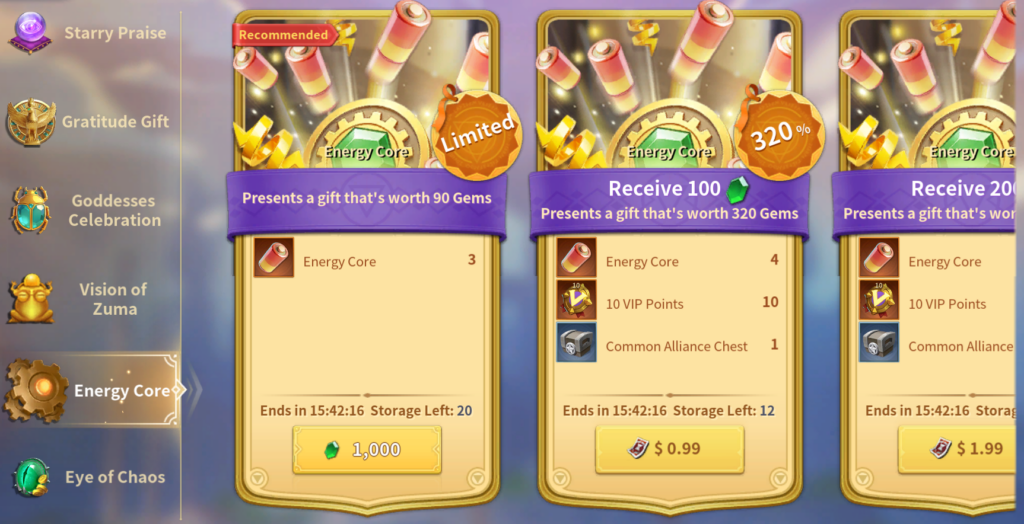
Everything starts with the gem conversion:
- 1000 gems → 3 Energy Cores
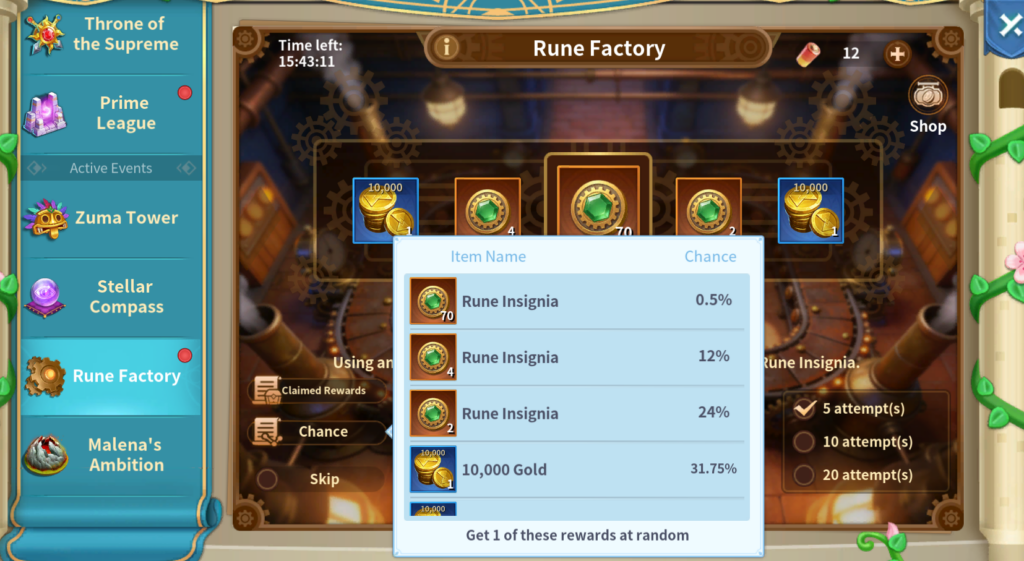
From there, those cores generate Rune Insignias. Using a cautious but realistic average incl. the pity mechanic as updated in the most recent change:
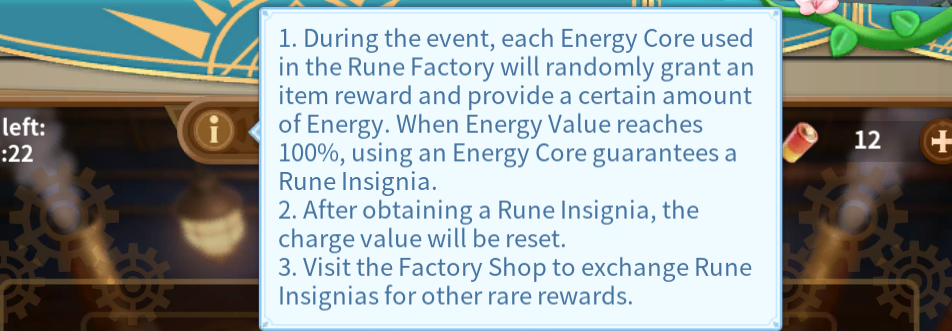
- 1 core ≈ 1.6–1.7 Rune Insignias
- 3 cores ≈ ~5 Rune Insignias
So in practical terms:
- 1000 gems ≈ ~5 Rune Insignias
This is the key number to keep in mind. You don’t need perfect precision—this approximation is stable enough to plan around and easy to work with mentally when deciding whether something is worth it.
What Chaos Fragments Cost in Gems
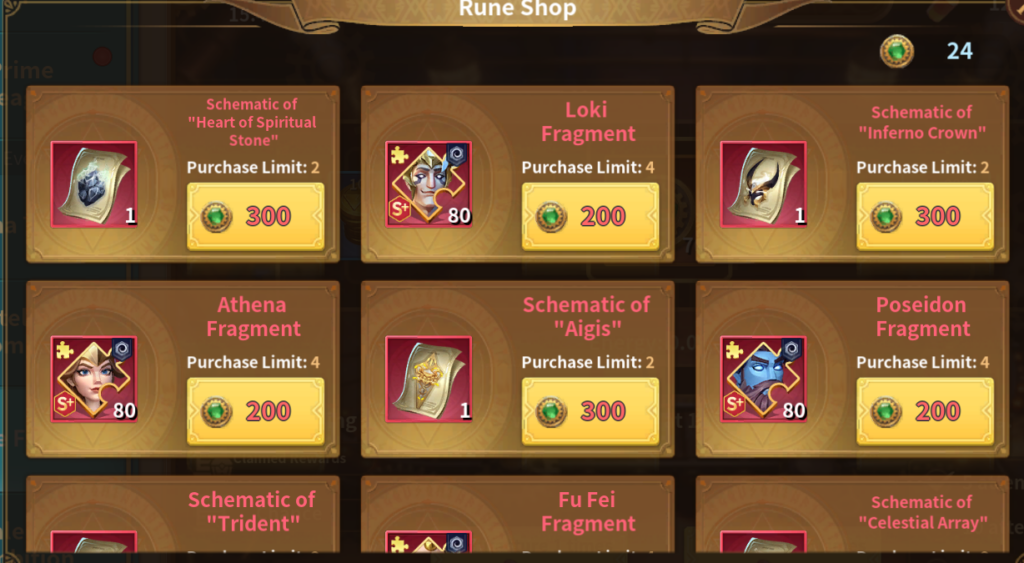
From the Rune Shop:
- 200 Rune Insignias = 80 Chaos fragments
If we apply the gem conversion:
- 200 Rune ≈ ~40,000 gems
That gives us a clean working estimate:
- ~40,000 gems → 80 fragments
- ~500 gems per fragment
This is the number that matters in practice. It tells you, at a glance, what you are “paying” when you decide to use gems here instead of saving them for something else.
What Chaos Artifacts Cost in Gems
Artifacts follow the same logic, just at a higher requirement:
- 300 Rune Insignias = 1 Chaos artifact
Using the same conversion:
- 300 Rune ≈ ~60,000 gems
So:
- ~60,000 gems per artifact
This is a significant investment, and it’s where most F2P players will need to be careful. Artifacts are powerful, but the cost ramps up very quickly compared to fragments.
How to Think About These Numbers
At first glance, these costs look high—and they are. Gems accumulate very slowly as a F2P player, so realistically this is not a worthwhile use of your gems if you are entirely free to play, as you will spend years before you finish a chaos immortal with artifacts. However, that knowledge in itself is very valuable!
Rune Factory is not meant to replace your normal Chaos progression. You’re not supposed to build an entire immortal from zero using gems. If you try to do that, it will feel extremely inefficient and slow. But it is quite good to know, if you are in a pinch for fragments and have gems to burn!
When It Does Not Make Sense
Just as important is knowing when not to use gems.
Once you translate Rune Factory into gem value, the earlier progression breakpoints become much easier to understand in practical terms. Using a consistent working estimate of ~500 gems per Chaos fragment, we can map out what each major milestone represents.
The first key breakpoint is 1640 fragments, which unlocks all stars and the artifact slot. At this rate, that comes out to roughly ~820,000 gems in total value. The next stage, reaching 3830 fragments for level 8 talents, lands at approximately ~1.9 million gems, and a fully optimized Chaos immortal at 6390 fragments sits around ~3.2 million gems.
Absolutely insane gem costs, not a viable progression path but a way to get those last few fragments you need.
Conclusion
Rune Factory gives F2P players something that most Chaos systems do not: control and precision.
At roughly:
- ~500 gems per Chaos fragment
- ~60,000 gems per artifact
…it is not cheap, but it is predictable.
Used correctly, Rune Factory becomes a tool you use to finish builds, not start them. If you treat it that way, it can be one of the most effective ways to bridge gaps and reach important Chaos milestones without relying entirely on slow event cycles.