Understanding the Spider Boss Combat Mechanics
2026-07-30
Titanula is one of the few PvE encounters in Infinity Kingdom where understanding the boss has a greater impact than simply increasing your march power. Players often spend weeks optimizing immortals and skills for…
Introduction
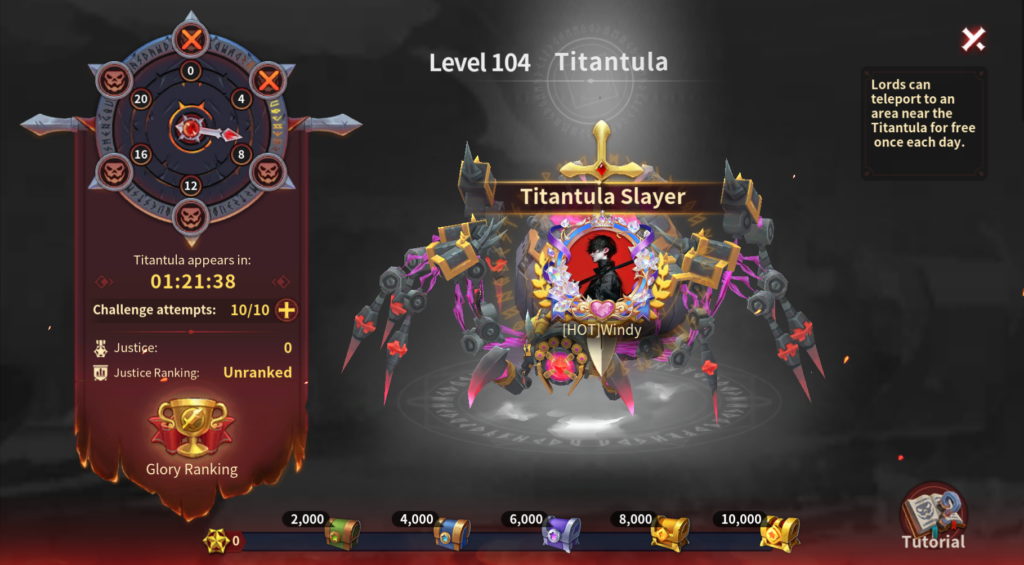
Titanula is one of the few PvE encounters in Infinity Kingdom where understanding the boss has a greater impact than simply increasing your march power. Players often spend weeks optimizing immortals and skills for higher damage, yet many overlook the mechanics that determine whether those damage dealers can actually perform throughout the fight.
Unlike most enemies, Titanula follows fixed targeting rules. Its attacks are completely predictable, allowing you to decide exactly which immortals will absorb damage and which will remain protected. Combined with the permanent Wounded effect introduced halfway through the encounter, those mechanics shape almost every successful Spider Boss build.
Once you understand how the boss works, the reasoning behind high-end Titanula marches becomes much easier to appreciate.
Titanula's Targeting Defines the Entire Encounter
The first mechanic to understand is also the most important: Titanula always attacks the front-left immortal with its basic attacks.
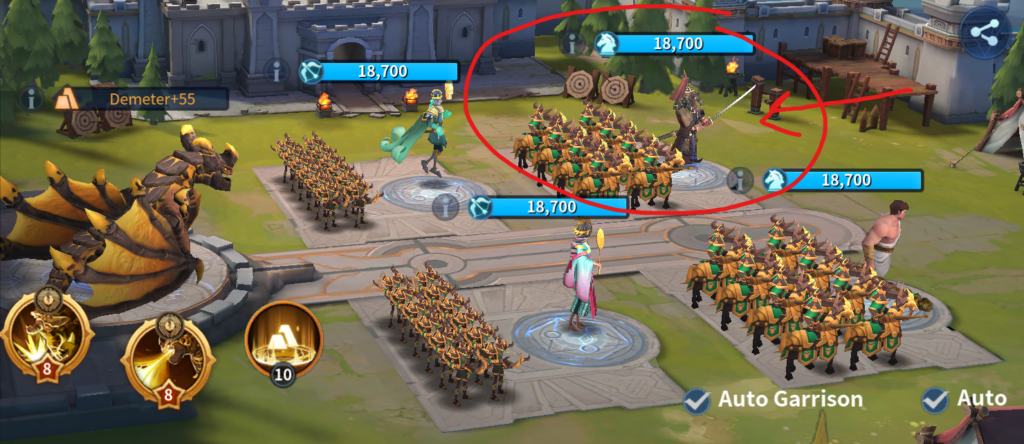
At first glance this might not seem particularly significant, but it becomes much more important once the boss begins using its ultimate. Contrary to what many players assume, Titanula does not deal full area-of-effect damage. Instead, its ultimate attacks in a straight line, striking the front-left immortal and the immortal positioned directly behind them.
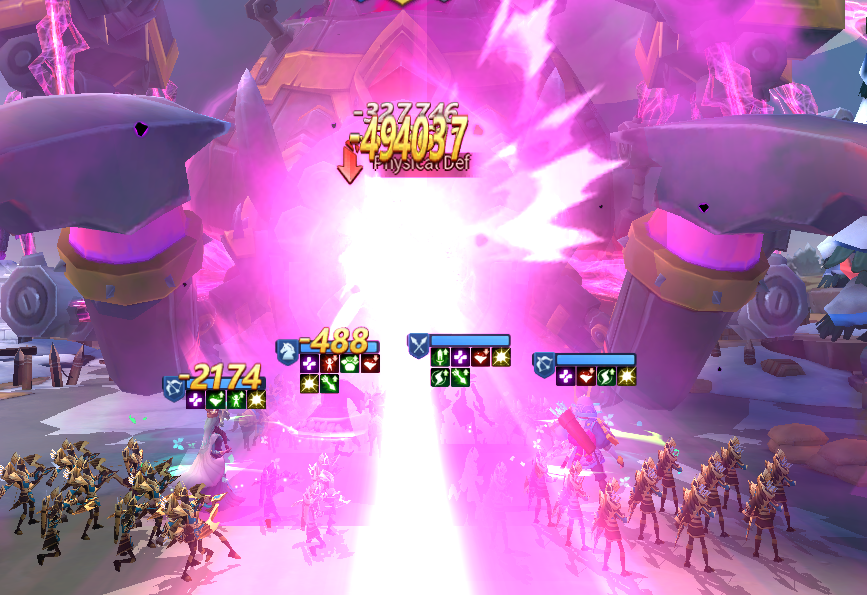
That means only one side of your formation is taking meaningful damage throughout the battle.
Once you know this, the positioning of most Spider Boss marches suddenly makes sense. Rather than placing damage dealers across both sides of the formation, experienced players deliberately stack their defensive and support immortals in Titanula's attack lane while keeping both primary damage dealers on the opposite side.
The reason is simple. An immortal's damage gradually falls as troop count decreases, so every attack your damage dealer avoids translates directly into higher damage for the remainder of the battle. Protecting Tutankhamun or Yoshitsune often provides a larger increase in total damage than replacing either immortal with a theoretically stronger alternative.
The Battle Changes at 50% Health
Once Titanula falls below 50% HP, the encounter enters its second phase.
At this point the boss permanently applies the Wounded debuff, preventing all healing for the remainder of the fight. Any strategy built around sustaining your march through healing immediately loses much of its value, shifting the focus entirely toward maximizing damage before the battle ends.
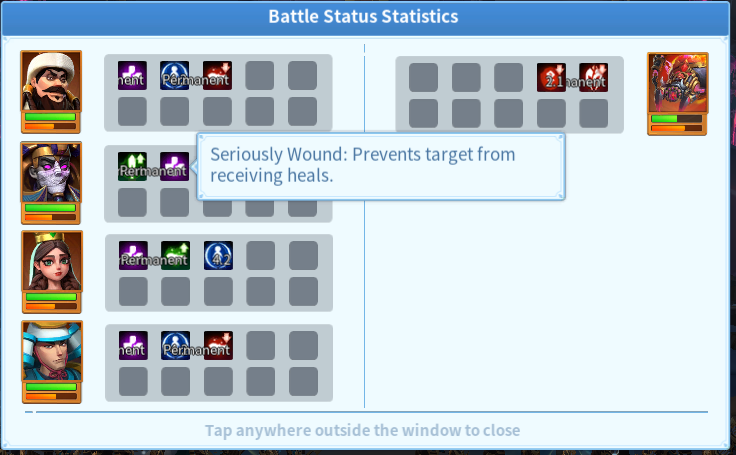
Interestingly, one of the strongest support combinations in the game continues working despite healing being disabled.
Wine and Dine doesn't trigger when healing is successfully restored. It triggers whenever an immortal attempts to receive healing. As a result, Fountain of Life continues activating Wine and Dine's Damage Dealt buff every six seconds throughout the second half of the encounter, even though no health is actually recovered.
It's a subtle interaction that many players miss, but it's also one of the reasons the combination appears in so many optimized Spider Boss marches.
Building Around the Boss
Once these mechanics are understood, building a Titanula march becomes much less about finding the highest Combat Power and much more about working with the encounter itself.
A good Spider Boss march generally follows a few simple principles. Your toughest immortal occupies the front-left position to absorb Titanula's attacks, with another support immortal directly behind them to take the secondary hit from the boss's ultimate. Both primary damage dealers are positioned on the opposite side of the formation, preserving their troop count for as long as possible, while healing is replaced by buffs that continue providing value after the Wounded phase begins.
Many of the strongest Spider Boss teams may look unusual at first glance, but they're all built around these same underlying mechanics. For build guides specifically crafted for the killing bosses, read more here!
Conclusion
Titanula rewards understanding rather than improvisation. The boss follows fixed targeting rules, attacks only one side of your formation, and completely changes the value of healing once the battle reaches its second half. Those mechanics explain why successful Spider Boss marches are often positioned differently from standard PvE teams and why certain skill combinations consistently outperform others.
Before experimenting with different immortals or chasing small damage increases through skill changes, it's worth making sure your formation is built around the encounter itself. More often than not, understanding Titanula's mechanics produces a larger improvement than simply adding more power to your march.